

KNOW THE SIGNS.
GET TESTED.
PROTECT YOUR HEALTH.
LEARN ABOUT STREP
Understanding strep throat is the first step to prevent rheumatic heart disease and save lives.
WHAT IS STREP?
Strep throat is an infection caused by Group A Streptococcus (Group A Strep) bacteria. It affects the throat and tonsils and spreads easily through coughing, sneezing, close contact, or shared utensils and drinking containers.
Unlike a viral sore throat, strep throat requires antibiotics prescribed by a healthcare provider.
Strep is a Bacterial Infection.
The good news:
✓ It is easy to diagnose.
✓ It is inexpensive to treat.
✓ Early treatment prevents rheumatic fever and rheumatic heart disease.
Not every sore throat is strep — but every sore throat deserves attention.
SYMPTOMS
KNOW THE SIGNS
Symptoms often begin suddenly, usually 2–5 days after exposure to the bacteria.
Common symptoms include:
✓ Sudden sore throat
✓ Pain when swallowing
✓ Fever
✓ Red, swollen tonsils
✓ White patches or streaks on the tonsils
✓ Swollen lymph nodes in the neck
Children may also experience:
✓ Headache
✓ Stomach pain
✓ Nausea or vomiting
✓ Loss of appetite
Unlike many viral infections, strep throat usually does not cause coughing or a runny nose.
WHEN TO SEEK MEDICAL CARE
See a healthcare provider if a sore throat comes with fever, difficulty swallowing, swollen glands, white patches on the throat, or symptoms lasting more than a couple of days. Prompt testing helps determine whether antibiotics are needed.
TESTING
Because many illnesses can cause sore throats, symptoms alone cannot always tell whether someone has strep.
Healthcare providers typically perform:
DON’T GUESS. TEST.
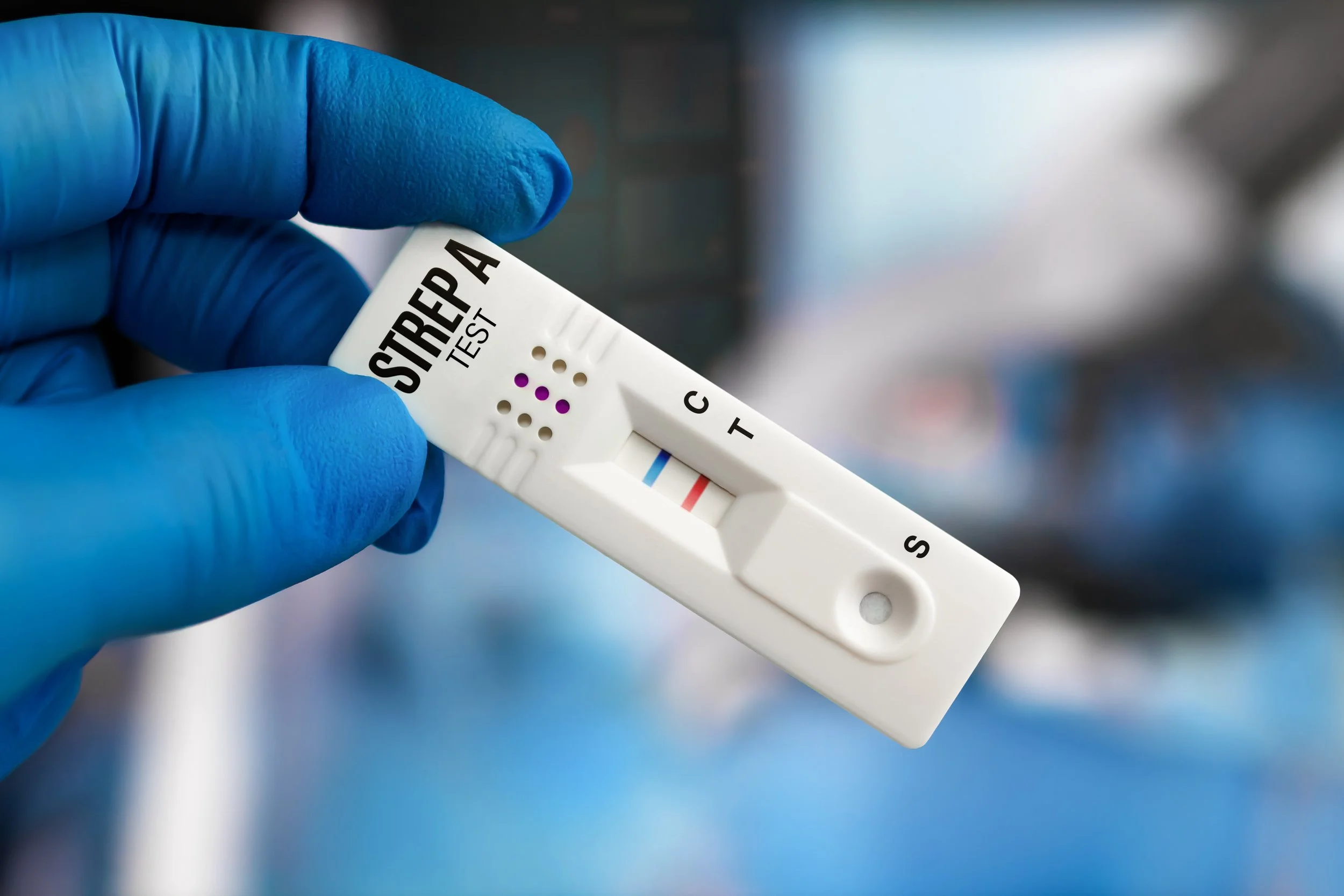
RAPID STREP TEST
A quick throat swab that can provide results in minutes.
Results in minutes
THROAT CULTURE
If the rapid test is negative — especially in children — a throat culture may be performed to confirm the diagnosis.
Results in 24-48 hours

TREATMENT
TREAT EARLY. FINISH EVERY DOSE.
Strep throat is treated with antibiotics prescribed by a healthcare provider. Treatment helps:
✓ Reduce symptoms sooner
✓ Prevent spreading the infection
✓ Lower the risk of complications
✓ Help prevent Rheumatic Fever and Rheumatic Heart Disease
REMEMBER
Even if you start feeling better after a day or two — finish every dose exactly as prescribed. Stopping antibiotics early can allow bacteria to survive and increase the risk of complications.
PREVENTION
STOP THE SPREAD.
There is currently no vaccine for strep throat, but there are simple ways to reduce the risk of infection.
✓ Wash hands often
✓ Cover coughs and sneezes
✓ Avoid sharing drinks, utensils, or toothbrushes
✓ Stay home until you’ve been on antibiotics for at least 24 hours and your fever is gone
✓ Replace your toothbrush after starting antibiotics
MOST IMPORTANTLY
Seek testing whenever strep is suspected and complete the full course of antibiotics if diagnosed.
BEYOND A SORE THROAT
WHY IT MATTERS.
50M+
people worldwide currently live with rheumatic heart disease — mostly children and young adults.
Most people recover from strep throat without any lasting problems. But when strep goes undiagnosed or untreated, it can lead to Rheumatic Fever (RF) and eventually Rheumatic Heart Disease (RHD).
The encouraging news is that early diagnosis and appropriate treatment of strep can stop this progression before permanent heart damage occurs.
QUICK ANSWERS
FREQUENTLY ASKED QUESTIONS.
-
Yes. Although it is more common in children, adults can also become infected.
-
No. Most sore throats are caused by viruses, not bacteria. Only testing can confirm strep throat.
-
Yes. Having strep once does not provide lifelong immunity, so reinfection is possible.
-
Even if symptoms improve quickly, stopping antibiotics early may allow bacteria to remain in the body. Completing treatment helps eliminate the infection and reduce the risk of serious complications.
-
Yes. In some people, untreated Group A Strep infections can lead to Rheumatic Fever (RF), which may eventually cause Rheumatic Heart Disease (RHD)—permanent damage to the heart valves. This is one of the primary reasons early diagnosis and treatment are so important.
-
Most people are no longer considered contagious after 24 hours of appropriate antibiotic treatment and once fever has resolved.
SUPPORT THE MISSION
RECOGNIZE STREP. TREAT STREP. COMPLETE TREATMENT.
Together, we can help end RF & RHD caused by untreated strep through education, awareness, and early action.